

This post was original made by the reddit user: Low-Entropy
Thanks for your contribution.


This post was original made by the reddit user: Low-Entropy
Thanks for your contribution.
In the ever-changing universe of electronic music, certain sonic innovations have drastically altered the landscape. While the Mentasm/Hoover sound, distinctive drum patterns, and various forms of distortion each carved their own evolutionary niches, one peculiar auditory phenomenon seemingly emerged from nowhere: the “Rave Signal.”
The Sound That Fell to Earth
What exactly is this “Rave Signal”? Also known as “bleep,” “beep,” “sonar sound,” or “rave alert,” it is an otherworldly tone that resembles a submerged sonar “ping” or a futuristic alert system—though often so transformed that it sounds more like an extraterrestrial transmission from a distant galaxy. If we search for historical precedents, perhaps the closest analogs are the real transmissions sent back to Earth by Sputniks, Voyagers, Mariners, and Pioneers as they traveled through the cosmos. As one might poetically observe: “I’m just raving with a satellite…”
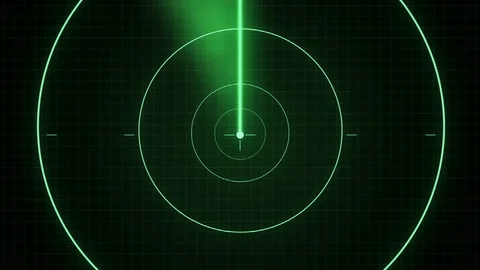
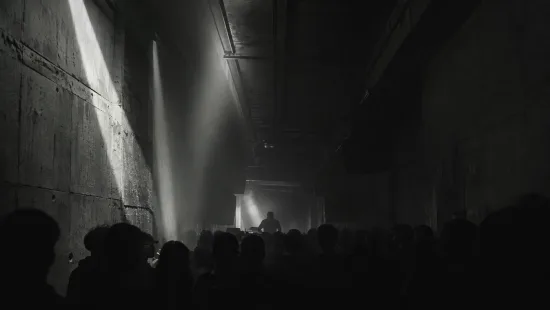
What sets the Rave Signal apart from other elements in electronic music is its decidedly non-melodic application. Typically, a single note repeats in a simple sequence across 1 to 4 bars. Unlike acid lines, orchestral hits, rave riffs, or hoovers—which enhanced the rhythm while adding melodic components—the Rave Signal often exists in a realm of pure atonality, serving as a hypnotic beacon cutting through the darkness of the dancefloor.
Interstellar Timeline: Tracing the Signal’s Path
The exact origins of this sound remain shrouded in mystery—who truly pioneered it may never be known for certain—but we can trace some key coordinates in the Rave Signal’s trajectory throughout electronic music history.
Joey Beltram – Energy Flash (1990)
When music critic Simon Reynolds names a book after your track, you know you’ve created something significant. Though not yet the fully-formed Rave Signal—the bleeps here have more of an acid character due to filtering—Beltram laid the foundational groundwork. The DNA of what would become the classic Rave Signal is undeniably present.
Meng Syndicate – Sonar System (1991)
Here we find “the real deal.” The track title directly references its sonar-like quality, and when combined with the deep drum pattern, it creates a profoundly hypnotic experience—a true portal to trance states. This represents one of the purest early manifestations of the Rave Signal concept.
Tellurians – The Navigator (1992)
Like “Energy Flash,” the signal here walks the line between acid/trance and pure bleep. Nevertheless, it’s a remarkable sonic achievement. The inclusion of “navigator” vocals creates a thematic bridge to submersibles with their sonar systems or spacecraft sending interstellar transmissions—reinforcing the sound’s conceptual foundations.
Stomach Basher – Wowy Zowy (1992)
By this point, the blueprint for “bleepcore” had crystallized: hypnotic, minimalist, nearly infinite looped “Signal” sounds floating above foundation-shaking beats in the lower frequencies. It’s a formula that would define countless tracks to follow.
Defcon – Blob (1992)
Featuring a “blob” rather than a conventional “bleep,” this track represents a crucial evolutionary moment: one of the first productions to incorporate the “Gabber” kick drum that would become ubiquitous in harder styles. The sound was getting tougher, preparing for the intensity to come.
Hardsequencer – Brain Crash (1993)
This Central European rave anthem dominated 1993. Almost too frenetic to be classified as pure “bleepcore,” its signal sounds had evolved beyond anything resembling sonars or terrestrial machinery—entering a truly alien sonic domain.
Neophyte – Level Creator (1993)
Although Neophyte produced several tracks with signal elements (including “Communicate”), “Level Creator” represents the zenith of the signal-gabber fusion—absolute sonic mayhem that still maintains the hypnotic quality essential to the form.
Sub Source – Sonic Distortion (1994)
Alongside Neophyte, Scott Brown established himself as a master of incorporating signals into his productions. The sounds here push toward the frenetic edge of what could still qualify as Rave Signals, stretching the concept to its limits.
Rave Creator – Bleep Blaster (1994)
When hardcore legend Marc Acardipane tackled the “genre,” he delivered a quintessential example. The title itself directly acknowledges the central sound element, cementing its identity in the process.
Bodylotion – No Worries (1998)
After the early ’90s golden era, Rave Signals became increasingly rare. This track—another alias project by Neophyte—stands as one of the last champions of the form during its initial wave, delivering an even rougher and harder iteration of the sound.
The Signal Fades… and Returns
After this initial flourishing, our beloved sublunar Morse codes largely disappeared from the radar of electronic music. For nearly two decades, they became elusive artifacts, occasionally surfacing in Jump or Newstyle productions but never reclaiming their former prominence. Yet in recent years, something remarkable has occurred: the Rave Signal has reemerged within the growing retro techno/rave/gabber movement. Those strange, hypnotic bleeps—those sounds that seemed to fall from the stars with no earthly precedent—are once again being transmitted across dancefloors worldwide. Perhaps this should not surprise us. After all, true signals don’t simply disappear—they travel through space and time, waiting for the right receivers to capture and interpret them once again.
Earthlings, rejoice!
 From Techno to Recovery: The First Month of Support for Colombia
 Hardgroove vs Hard Techno: Why Swing, Funk and Percussion Are Winning in 2026
 Hypnotic Techno: How Repetition, Space and Subtle Motion Build the Groove
 Tribal Techno: How Percussion, Groove and Polyrhythm Shape the Sound
 Best Techno Album Releases: What Makes a Strong Album Worth Buying?
 Salva