

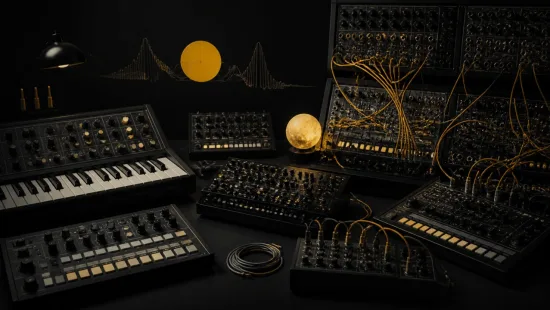
To talk about techno is to talk about machines. But not just any kind. We’re talking about analog sequencers: devices that, beyond their retro aesthetic or unpredictable nature, serve precise functions in music creation. Their value lies in how they organize, transform, and repeat musical patterns that become the backbone of techno.

The Importance of Sequencers in Music
Analog sequencers allow the programming of sequences of notes, gates, and other musical events, controlling synthesizers through voltages (CV/Gate). Their operation is linear and tangible, offering a direct relationship with sound: no screens, no menus—just knobs, switches, and the machine’s immediate response. This creates a workflow that sparks creativity: every mistake can become a new idea, and every repetition, a form of trance.
Machines That Left Their Mark
- Roland TB-303
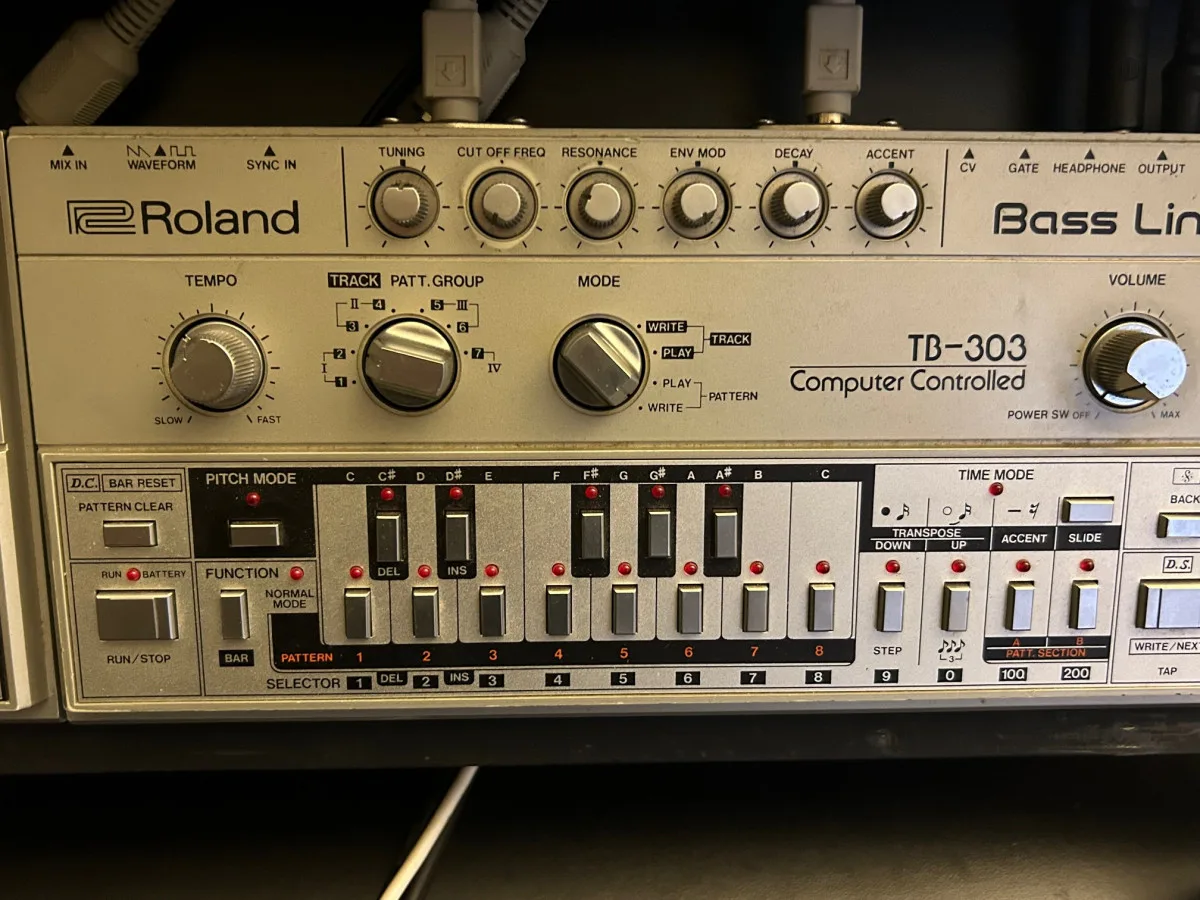
Function:
Integrated monophonic sequencer originally designed for basslines.
Allows programming of up to 16-step patterns with variations in pitch, accent, and slide.
Contribution to Techno:
Its ability to create fluid, resonant basslines defined the sound of acid techno.
Used by: Richie Hawtin, Luke Vibert.
- Korg SQ-10
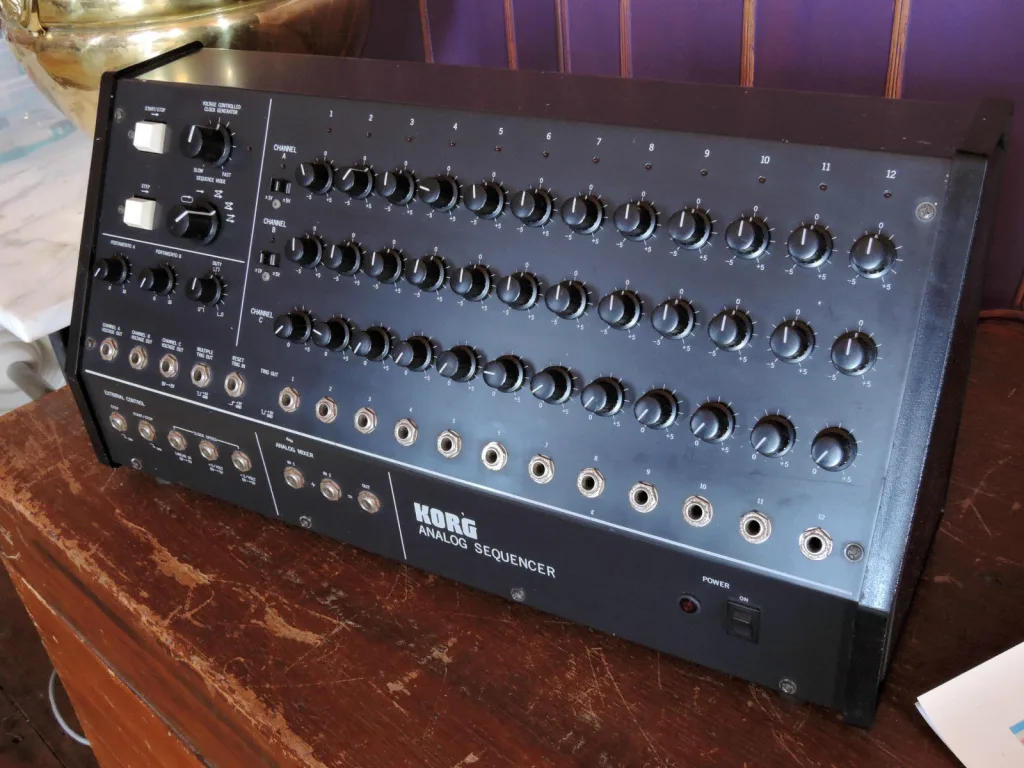
Function:
Step sequencer with three rows (A, B, and C), each with 12 steps, capable of controlling different CV signals simultaneously.
Ideal for modulating oscillators, filters, and envelopes on analog synthesizers.
Contribution to Techno:
Enabled exploration of simultaneous variations in pitch, filter, and amplitude, paving the way for a more experimental sound.
Used by: Kraftwerk, Chris & Cosey.
- Doepfer Dark Time
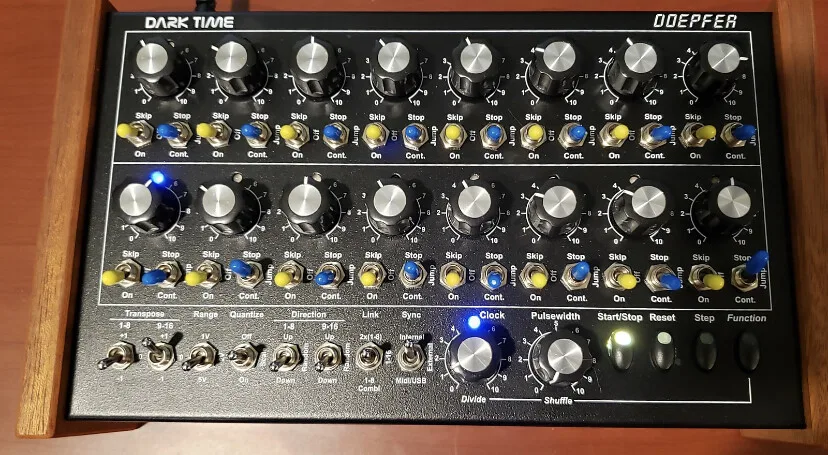
Function:
Analog sequencer with two 8-step rows, featuring independent controls for pitch, gate, and duration per step.
Includes MIDI, USB, and CV/Gate outputs, making it easy to connect with both modern and classic gear.
Contribution to Techno:
Perfect for crafting repetitive rhythmic or melodic lines, especially in modular systems.
Used by: Surgeon, Blawan.
- Arturia BeatStep Pro
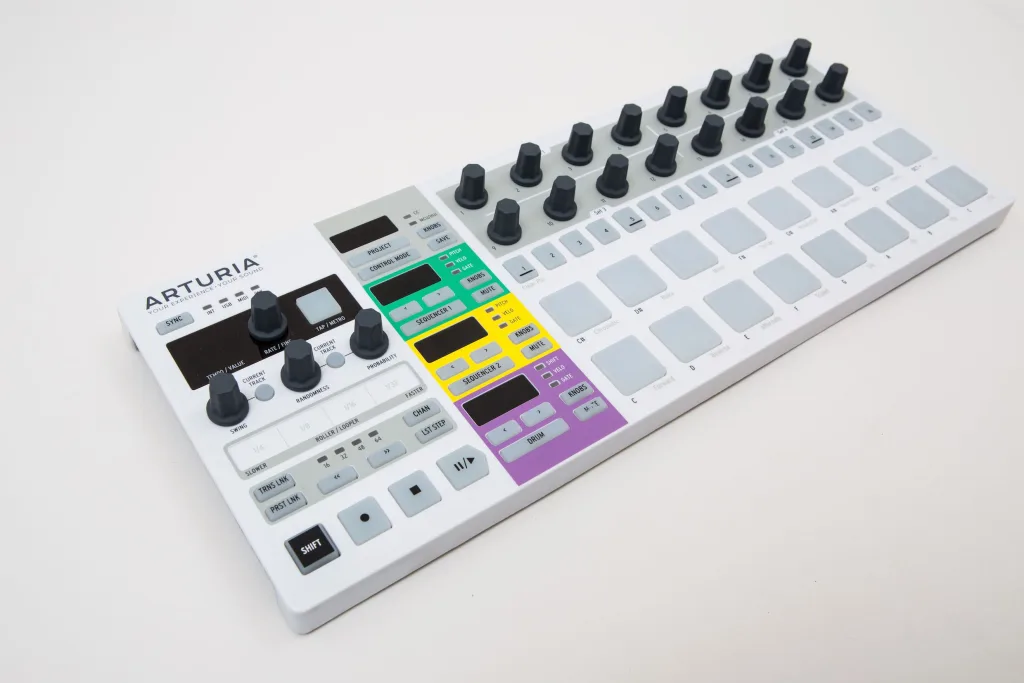
Function:
Step sequencer with 2 melodic tracks and 1 drum track, controlled via pads and knobs.
Can send CV/Gate or MIDI signals, allowing sequencing of analog synths, drum machines, and software.
Contribution to Techno:
Flexibility and intuitive control, ideal for live sets requiring a controlled yet dynamic structure.
Used by: Amelie Lens, Charlotte de Witte.
- Korg Volca Series (Volca Bass, Volca Beats, Volca Modular)
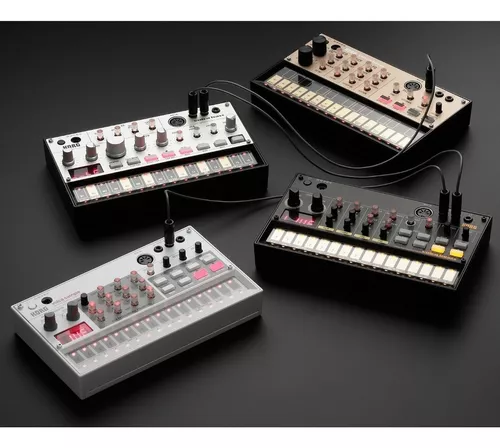
Function:
The Korg Volca series integrates compact synthesizers with intuitive step sequencers, ideal for producing bass patterns, drum beats, melodies, and modulation. Each unit features its own internal sequencer with functions like motion sequencing, active step, and step jump, allowing real-time parameter adjustments.
Contribution to techno:
Despite their small size, the Volcas offer great flexibility for improvisation, creating complex loops, and building live sets. They have democratized access to analog hardware, enabling more artists to engage with this language without technical or financial barriers.
Used by: Young producers, hybrid DJs, and DIY hardware enthusiasts.
Controlled Imperfection: A Sonic Language
Techno isn’t surgically precise music. It’s a conversation between order and chaos, between structured repetition and human interference. Analog sequencers allow the creation of patterns that feel alive, thanks to their subtle fluctuations, the possibility of manual intervention, and the inability to predict every outcome.

In the studio, on stage, or within a modular system, analog sequencers continue to offer something digital rarely achieves: sonic character.
They do this not just through their sound, but through how they force you to think about and play music.
They’re not just tools. They’re part of the creative process. Part of the sound. Part of techno
 From Techno to Recovery: The First Month of Support for Colombia
 Hardgroove vs Hard Techno: Why Swing, Funk and Percussion Are Winning in 2026
 Boris Brejcha: From a Difficult Childhood to the Rise of High-Tech Minimal
 Hypnotic Techno: How Repetition, Space and Subtle Motion Build the Groove
 Tribal Techno: How Percussion, Groove and Polyrhythm Shape the Sound
 Best Techno Album Releases: What Makes a Strong Album Worth Buying?