

Electronic music didn’t emerge by chance; it was the result of bold minds that challenged the boundaries of technology and perception. Though historically associated with men, many women laid the foundations for what we now understand as electronic music. Daphne Oram, Delia Derbyshire, Bebe Barron, Eliane Radigue, Pauline Oliveros, and Laurie Spiegel were the architects of a sound that reshaped the way we hear and experience music.

From Symphony to Circuit
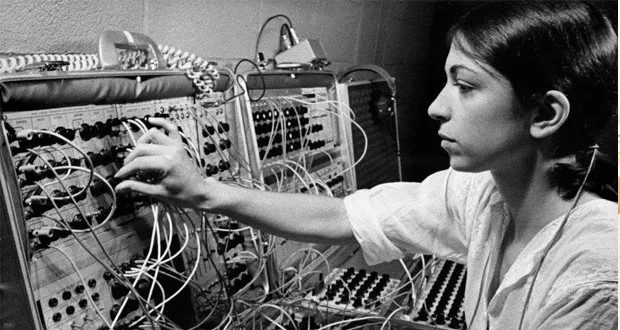
In the mid-20th century, technology allowed artists to move away from traditional instruments, opening up a wide range of possibilities. The pioneers of electronic music didn’t just use the available equipment—they transformed it, creating new sonic landscapes. Their music was not only a technical act but a form of resistance, a challenge to imposed norms.
Daphne Oram: Oramics System
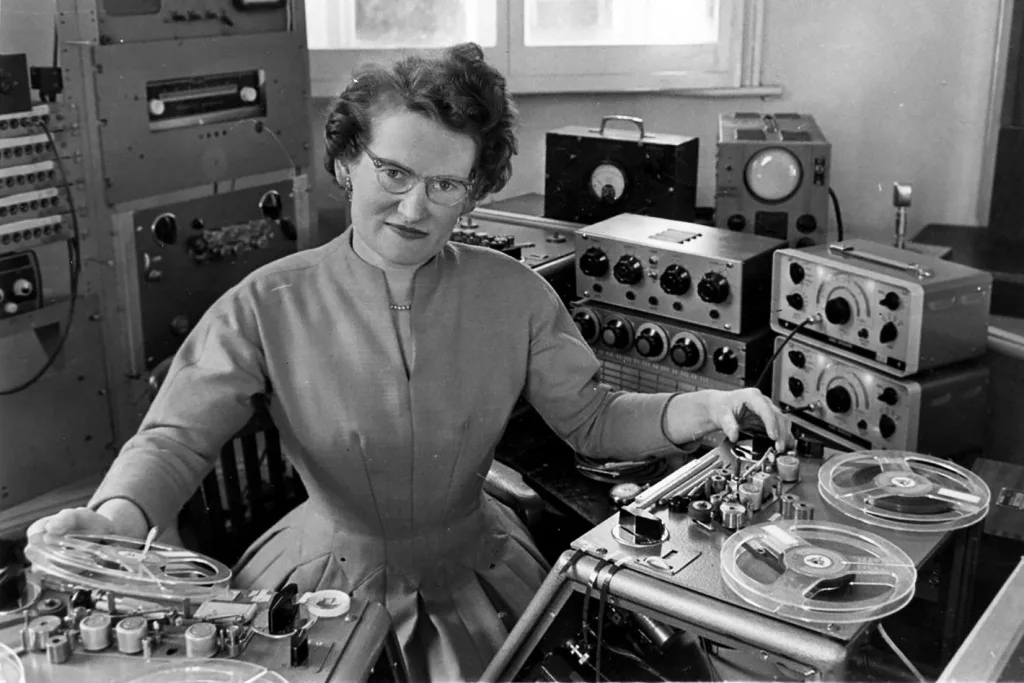
An inventor before a composer, a scientist without a lab coat. In the 1950s, Daphne Oram not only co-founded the BBC Radiophonic Workshop but also developed the Oramics system, a way of “drawing sounds” onto 35mm film. It was literally a visual score that the device translated into sound waves. She was the first woman to establish and run an independent electronic music studio in the United Kingdom. Her book An Individual Note of Music, Sound and Electronics (1972) already foreshadowed a holistic view of the relationship between technology and sensibility.
Delia Derbyshire: Creator of “Doctor Who” movie theme
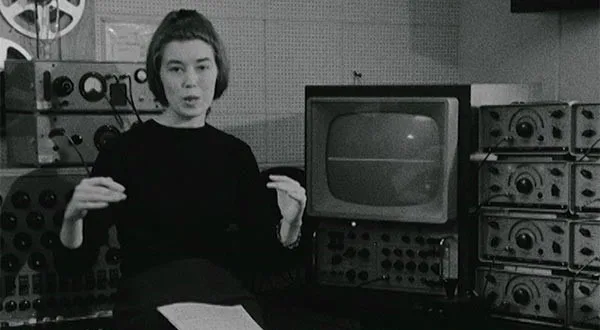
When Ron Grainer delivered the score for the Doctor Who theme, he couldn’t have imagined that Delia Derbyshire would transform it into an immortal piece. She manipulated tapes, generated sounds with test equipment, cut, sped up, and assembled each note by hand. In the 1960s, her work challenged the notion that music had to originate from instruments. She was a mathematician, physicist, artist. Her personal archive, discovered after her death, revealed hundreds of unpublished works that showcase a radically modern mind. Derbyshire also collaborated with Peter Zinovieff and Brian Hodgson, exploring musique concrète, sound collage, and structural composition without scores.
Bebe Barron: “Forbidden Planet“
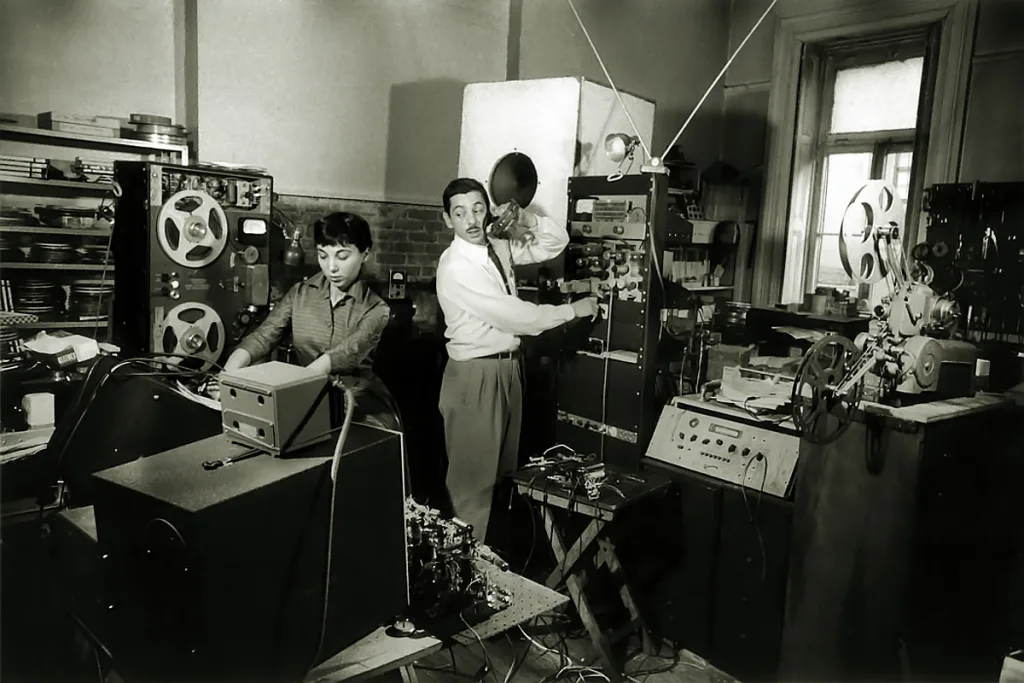
In 1956, the film Forbidden Planet changed cinema history not only for its sci-fi aesthetic but for its entirely electronic soundtrack. It was the work of Bebe Barron and her husband Louis, though it was she who shaped the sounds, treating them as living entities. The Barrons used circuits pushed beyond their normal limits to create the unpredictable. Bebe, with no formal training in composition, applied an almost alchemical logic to sound. The fact that the soundtrack couldn’t be legally registered as “music” (due to lacking a score) is a symbol of how far ahead of its time it was.
Eliane Radigue: “Trilogie de la Mort“
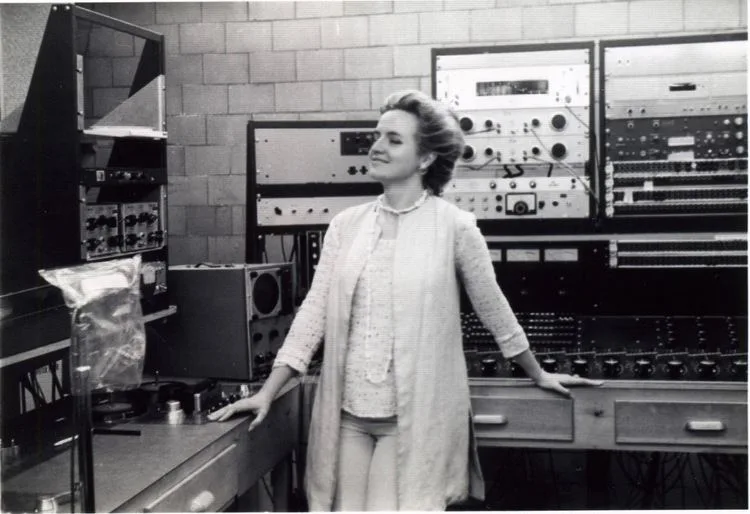
French, a disciple of Pierre Schaeffer and Pierre Henry. But Eliane Radigue didn’t stop at musique concrète: she transcended it. From the 1970s onward, she worked exclusively with the ARP 2500 synthesizer, creating expansive, hypnotic pieces with glacially slow evolution. Her Trilogie de la Mort, inspired by Tibetan Buddhism, lasts over three hours and is conceived as a meditative sound experience. Her work sits between the spiritual and the electronic, challenging the logic of time in listening
Pauline Oliveros: The Philosophy of “Deep Listening”
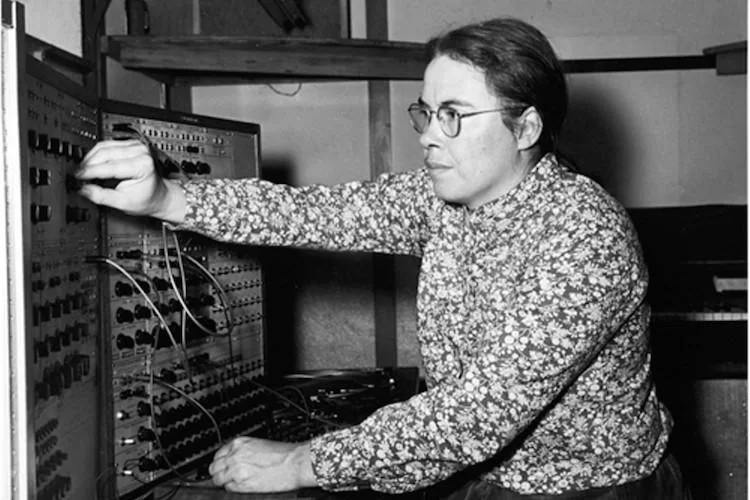
In an era that celebrated rupture, Pauline Oliveros proposed a reinvention: radical listening. She founded the concept of Deep Listening, blending improvisation, environmental perception, and bodily awareness. Her work with the Expanded Instrument System (EIS)—a real-time processing system—allowed her accordion to transform into a fluid, profound soundscape. Oliveros was also an activist: openly queer, feminist, and an advocate for universal access to sound creation. Her work wasn’t just musical—it was philosophical.
Laurie Spiegel: “The Expanding Universe“
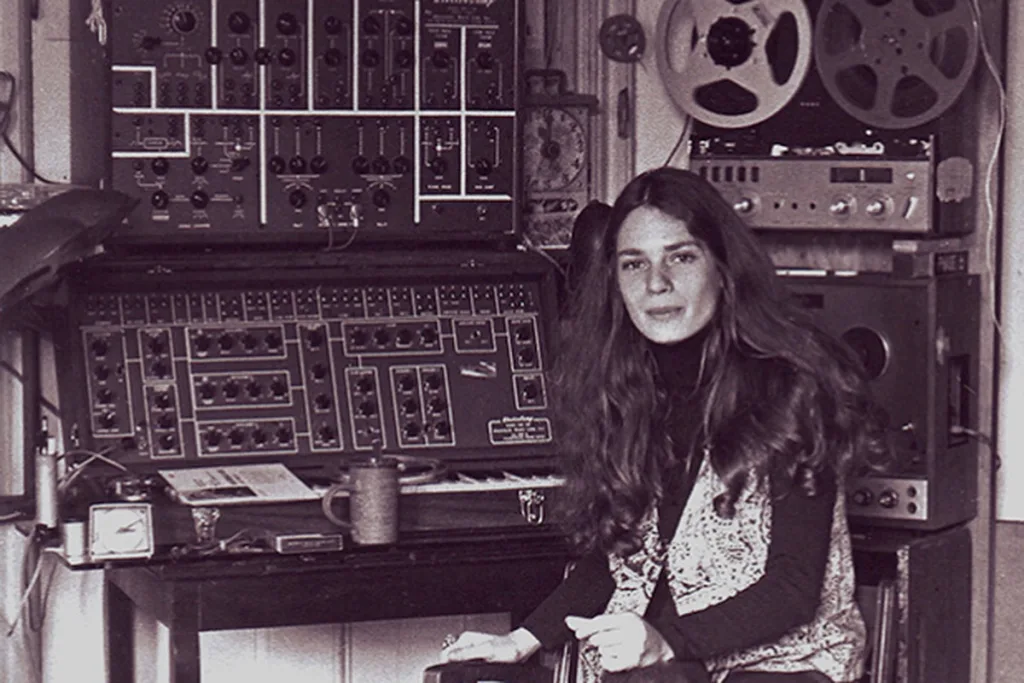
At the intersection of Baroque music, physics, and programming emerged Laurie Spiegel. In the 1970s, at Bell Labs, she created tools that allowed her to compose with algorithms—not as a replacement for creativity, but as its expansion. Her software Music Mouse became a digital instrument that enabled people without technical training to improvise complex music. Her album The Expanding Universe (1980) is a digital symphony that still sounds relevant today. Her most iconic work? Kepler’s Harmony of the Worlds, which travels through space on the Voyager Golden Record as a representation of human intelligence.
Legacy in the Waves
These women were not just pioneers of electronic music—they redefined what we understand by sound. By challenging gender stereotypes and exploring new ways to create music, they opened up a sonic world that remains alive today. Every time we hear a synthesizer, let us remember that those waves are not just technology—they are the legacy of women who rewrote the history of music
 Hardgroove vs Hard Techno: Why Swing, Funk and Percussion Are Winning in 2026
 Boris Brejcha: From a Difficult Childhood to the Rise of High-Tech Minimal
 Hypnotic Techno: How Repetition, Space and Subtle Motion Build the Groove
 Tribal Techno: How Percussion, Groove and Polyrhythm Shape the Sound
 Best Techno Album Releases: What Makes a Strong Album Worth Buying?
 Salva