

In the vast ocean of electronic music, where beats are waves carrying us beyond time, a question arises like a small boat floating in the immensity: Is Paul Kalkbrenner a DJ? This is not merely a matter of semantics but an invitation to explore what it truly means to be an artist, a creator, and how we define these roles in a world where music connects the human with the universal.
As Alan Watts might encourage us, rather than seeking absolute answers, let us walk the path of reflection, allowing the question to reveal more than we might initially imagine.
The DJ as Architect of the Moment
Traditionally, a DJ is seen as a master of the present, someone who selects and mixes music to shape the energy of a dancefloor. A craftsman of the now, a storyteller weaving narratives through transitions and beats.
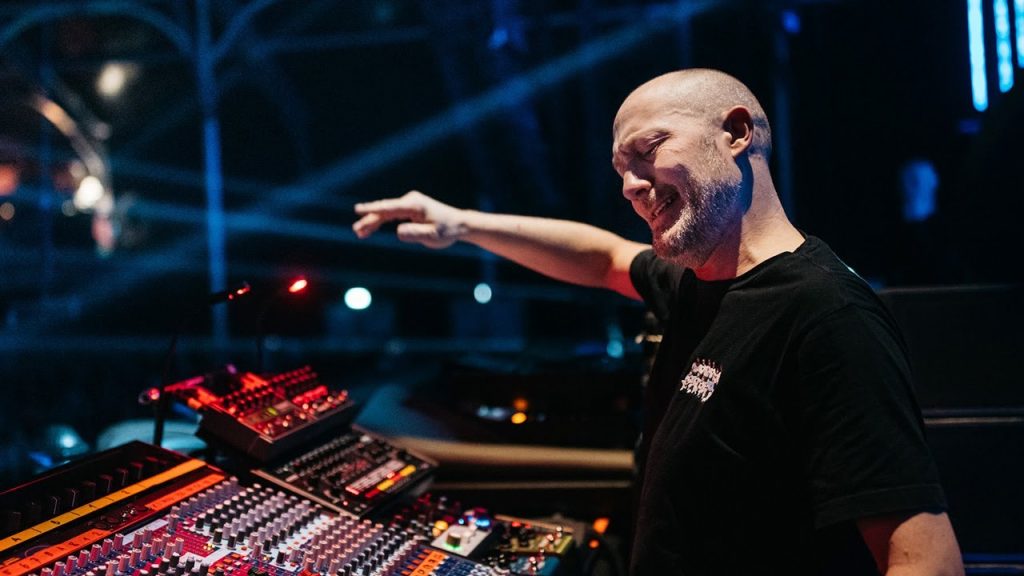
Paul Kalkbrenner, however, doesn’t fit this classic description. His art is not about mixing other people’s songs but about constructing unique sonic landscapes through his own music. Each live performance is a journey through his creative mind, an intimate encounter with the emotions embedded in his productions.
Watts would say that the labels we use—“DJ,” “producer,” “artist”—are like maps, useful for orientation but incapable of fully capturing the territory they represent.
Live Creation: The Art of Paul Kalkbrenner
When Paul Kalkbrenner steps onto a stage, what he offers is not a mix but a construction. Like a painter blending colors in real time, he uses synthesizers, sequencers, and samples to bring his music to life in the moment. His performances are not mechanical repetitions of what he has already created but reinterpretations of his own sounds.
Here, Watts might remind us that true creation is not about control but about flowing with the moment. Just as a river is never the same at two points along its course, Kalkbrenner’s music during each performance is unique, unrepeatable, alive.
Beyond Labels
So, is Paul Kalkbrenner a DJ? Perhaps the question itself reflects our need to classify, to place limits where none truly exist. Watts would suggest that art, like life, is far greater than our definitions, and clinging to a label distances us from the real experience.
Paul Kalkbrenner doesn’t need to be a DJ to move a crowd or connect with something deeper within the human soul. His music, like a meditation, transcends roles and categories. Instead of asking what he is, we could simply let his sound take us where words cannot reach.
The True Meaning of Art
Ultimately, Paul Kalkbrenner’s work invites us to let go of labels and experience music as a bridge between the human and the transcendent. As Alan Watts might say, it’s not the category that matters but the moment of connection—that instant when we stop being spectators and become part of the universal symphony.
Is Paul Kalkbrenner a DJ? Perhaps the truest answer is: Paul Kalkbrenner simply is.