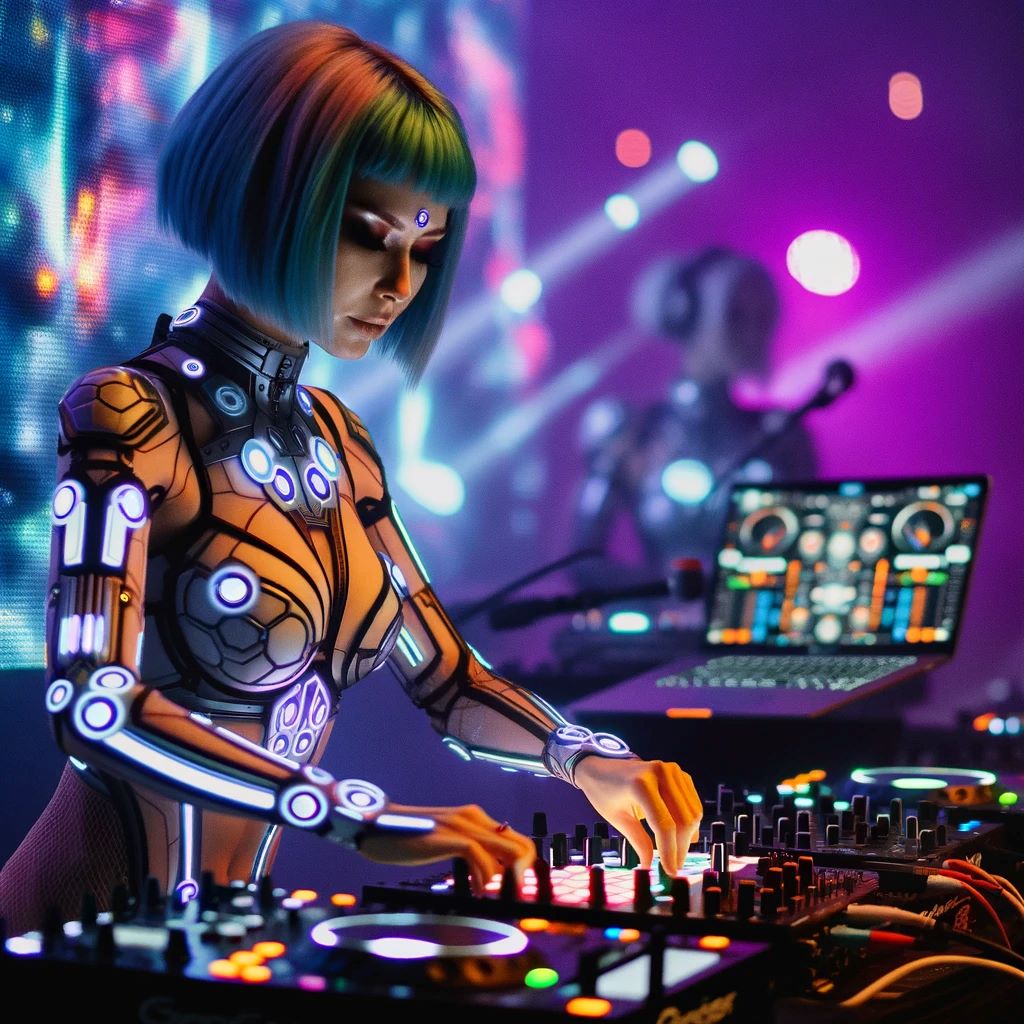

In the vast and resonant universe of techno music, where each beat pulses like a mechanical heart, a new force has begun to weave itself into the narrative: artificial intelligence. This ethereal entity, devoid of soul or emotion, is carving its place in the realm of musical creation. Is AI a divine tool expanding the boundaries of human creativity, or a specter threatening to reduce the artist to a shadow of their former self?
As philosopher Alan Watts might propose, this question doesn’t seek a simple answer but rather a profound exploration of the balance between machine and human spirit.
The Renaissance of Machines
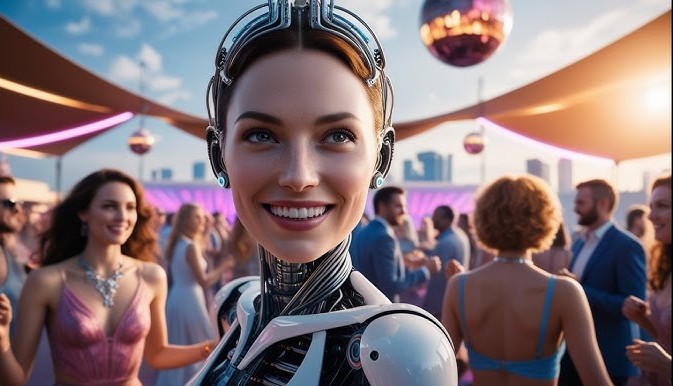
Imagine for a moment that every synthesizer, every modulator, every compressor is an extension of the artist’s mind—a tool through which their thoughts and emotions dance. Now, artificial intelligence enters the stage as a new collaborator, capable of composing melodies, generating rhythms, and transforming frequencies with a precision that sometimes defies human comprehension.
Watts would remind us that technology is not an enemy but a manifestation of humanity’s own imagination. AI doesn’t appear from nowhere; it is the reflection of our relentless pursuit to overcome limitations. In this sense, is AI a threat, or simply a new mask the artist can wear to express themselves?
The Death of the Creative Ego
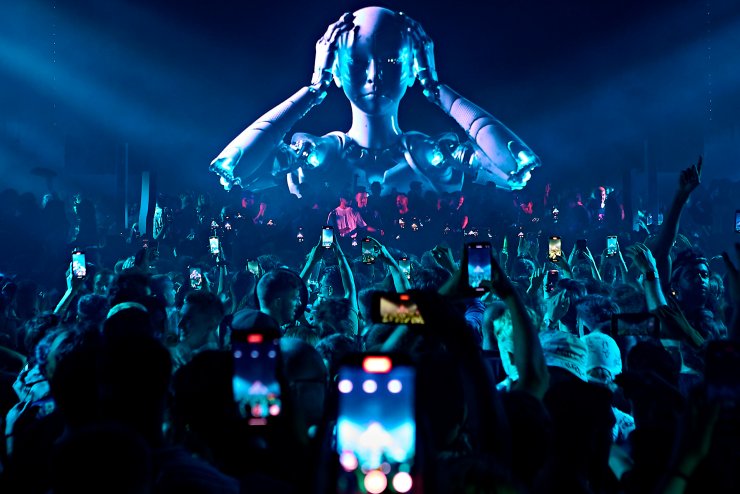
At the heart of techno music—and all artistic creation—lies the ego of the creator: the desire to shape, to imprint a fragment of the soul into every work. However, AI seems to blur the boundaries of that identity. If an algorithm can generate a perfect track, where does the artist fit?
Watts, with his zen wisdom, would invite us to see that this fear is merely an illusion of the ego. Art doesn’t belong to anyone; it is a flow, a river that passes through the artist. AI doesn’t kill the creator; it simply redefines their role. Perhaps true art isn’t about control but about allowing things to emerge, even if that means sharing the creative space with a machine.
A New Kind of Dance
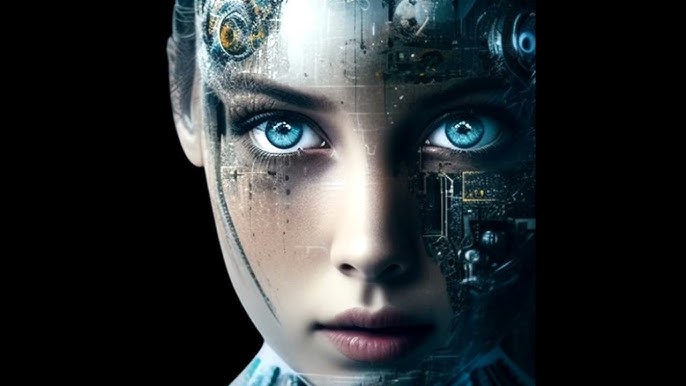
The relationship between the artist and AI doesn’t have to be a battle—it can be a dance. In this dance, the machine can be both a mirror and a partner. Algorithms don’t dream, but they can reflect the creator’s dreams in unexpected ways.
Just like techno itself, where loops repeat until the listener’s mind enters a trance, AI can repeat, process, and reorganize, revealing something new in the process. Perhaps the most important question isn’t whether AI creates art, but how humans respond to that creation. Watts might say that the value isn’t in the tool but in how we use it to awaken something greater than ourselves.
Revolution or Loss?
So, is AI a creative revolution or the death of the artist? Watts would encourage us to let go of this dichotomy. It is both and neither. It is a reminder that art has never been static; it has always been a constant flow, an interaction between the known and the unknown, the human and the beyond-human.
On the dancefloor, where bodies move to sounds that could have been created by a human or a machine, it doesn’t matter who made the music. What matters is the moment, the connection, the trance. Ultimately, AI in techno isn’t an end or a beginning—it’s a new chapter in a story that has always been an exploration of the infinite.